Jan 2, 2013

Review: Phish MSG NYE (webcast)

Motivated by the teeth-grinding frustration of missing Phish's stand at Bill Graham Civic Auditorium this summer due to a work-related scheduling snafu (I had the tickets in my hand and everything), I had originally intended to just blow a bunch of the money I've managed to save over the last few years and go see the band at Madison Square Garden over New Year's to make myself feel better. It's long been a dream of mine to see the band in New York, playing their signature NYE run, and this year I was finally in a position to (maybe) realize that dream. Unfortunately, tickets were much harder to come by than I had imagined, and I couldn't actually afford to buy a plane ticket, reserve a hotel for four days, and pay StubHub prices for four nights' worth of shows. My backup-backup plan, then, was to watch all four shows at my house through the LivePhish webcast. However, Lindsey and I had much more fun in Montana over Christmas than we imagined we would, and as a result we didn't get back to Pullman (or anywhere with internet for that matter) until late on the 30th. Therefore, my backup-backup-backup plan became to download the first three nights of the run after the fact and watch only the NYE show through the webcast. It was the next best thing to being there even though it very obviously wasn't being there.

I've watched a few Phish webcasts before, and this one was of even higher audio/video quality than the ones I'd seen before. Streaming it over my computer while running the video through my 36-inch TV and running the audio through my fancy turntable-sound-setup was pretty much analogous to watching a concert DVD. Plus, it was oddly weird and fun to be able to pick up my guitar and jam along with Trey as he played in real time on the other side of the country. Weird. The only thing that really bugged me about the webcast was the price. For $20, I feel like I should get to keep the stream after I've watched it. Hell, that's well over the cost of most DVDs today, and yet you watch the show and then that's it...poof, it's gone. I feel like they should either drop the webcast price a bit ($10 or $15) dollars in the future, or keep it where it is or raise it slightly ($20-$25) and let you download an .mp4 version afterward or maybe at least give you a complimentary version of the show's .mp3 recording or something. I paid way less than $20 to see The Hobbit in 3D on an Imax screen in a huge theater (and the two experiences were nearly equal in length, if you're considering the price point from a quantitative rather than qualitative angle). $20 just seems like a lot. On the other hand, had I purchased all four shows (for the marked-down bulk price of $58) it wouldn't have seemed like a rip-off...after all, that's about the price of a ticket for one show, to be able to watch four shows in the comfort of your home. It was nice to be able to get up whenever I wanted to go to a bathroom with no line, to be able to go make a sandwich during setbreak and not worry about paying $10 for a cookie and losing my place at the rail in the process...

Anyway, the show.

The show itself was, it seemed to me, a fitting close to 2012, the best year thus far of 3.0 (and, of course, the only year of 3.0 in which I failed to see a single show). I was hoping to see some monster jams, especially after what I'd heard of 12/28 and 12/30,  but I wasn't really surprised that they didn't materialize. NYE is a three-set monster every year, but it's always more a celebration, a party, than a deconstruction of song or an abstract ambient meltdown. It's the one Phish show of the year that's entirely about fun, and not much else. And in that regard, it lived up to its own hype. It was a very fun show from front to back, featuring a lot of good song selections, some great antics, a few genuinely touching moments, and, yes, a few solid jams (though those who demand that their jams have to run over 20+ minutes to be worth anything will disagree, I'm sure).

The show opened with a cover of Ricky Nelson's "Garden Party," a song I wasn't familiar with, but fit so well with the Phish sound that as it started I thought maybe it was a new original. The lyrics were appropriate, referencing the (Madison Square) Garden party and featuring some unsubtle digs at the band's desire to keep playing what they want to play regardless of what overanalyzing bloggers might think of 3.0. It was the semi-playful "fuck you" to their detractors that Phish has always excelled at, and it was a good song to boot.

The first set was, predictably, largely song-based, and though I was happy to hear "Roses Are Free," nothing interesting happened for the first bit aside from some extra-clever Trey soloing in "Sample." Then the "Mike's" hit and things started to get good-weird. "Mike's" proper stayed within the usual boundaries, though Trey brought a little extra to the guitar-heavy jam, but it was the unexpected segue into "Walk Away" that really got things going. It's one of my favorite currently-popular Phish covers and it was neat to have it pop up in such an unexpected place.
I was a bit disappointed when, just as things seemed to be taking off, "Walk Away" fizzled out, leaving Mike's Groove incomplete (at least momentarily). Fortunately, the "Weekapaug" that came out of this rare mid-Mike's break in the action was quite possibly the highlight of the night, and more evidence that we don't necessarily need 20+ minute versions of songs to get some fascinating improvisation.
This version goes places in eight minutes that a lot of versions don't in three times that much time.

A messy "Character Zero" followed to end the first set, and then we were on to the second set, where the only real spaciness of the night would occur. Things started off excitedly (for me) with "Birds of a Feather" and the hope that its being placed in the first slot of the second set meant we might see a monster version. The band ended up settling on a pretty rote reading of the song, though, and then launched, unceremoniously, into "Ghost," their go-to NYE jam.

This "Ghost" was nothing stratospheric by any means (see the '10 NYE "Ghost" for an example of what I'm talking about), and on its own, it's just an average-good jam, but paired with the "Piper" that followed, it works as a single piece of music that's right up there with some of the band's better work this year.
I like the "Weekapaug" better because it's a little weirder; nothing really happens in the "Ghost" > "Piper" that hasn't been done before, but it hangs together really well and the minute or two of blissed-out ambiance that bridges the two pieces are easily the best part of the night, taken alone.

"Piper" ran right into "Light" which continued into "2001." Really, it's easy to imagine a "Ghost" > "Piper" > "Light" > "2001" set that runs for 90 minutes all by itself, isn't it? That isn't what happened here, but a guy can dream. Anyway, that second half of this segue-fest was a great time, even if "Light" was a much more straightforward reading than most of its other '12 takes.
The segue into "The Horse" was pretty unexpected and well-done, and it's always a treat to hear a decently-played "Silent in the Morning."

The third set was big on antics, of course, featuring "Kung" and then an actual "runaway golf cart marathon" that took place during "Chalkdust Torture" and "Tweezer Reprise." As usual (for me at least), it was hard to really understand what the point of the NYE gag was until after the fact; at the time it just looked like a lot of people on stage dancing and being goofy while the band desperately tried to play their instruments as ping pong balls rained down on them from the ceiling (Fishman was especially hilarious in this regard). There were no real musical high points in the third set, but again, that's sort of to be expected. The antics highlights for me were (for sure) the covers of "Fly Like an Eagle" and "Iron Man," and the acapella version of "Lawn Boy" was a unique (and thematically appropriate) way to end the third set.

Anyway, as I said, this was a fun show. Likely more fun to watch than it will be to relisten to a few months or years from now. There are a few legit musical highlights, but mostly it was just a fitting send off to 2012 featuring a lot of goofiness and solidly played, fun, danceable songs.

While I wait for my next chance to catch up with the band (likely in June, I hope), I'll be listening to and doing short reviews of as many of 3.0's shows as possible. I already gave 3/6/09 a relisten the other day and will have my (much briefer) thoughts on it up shortly. I've never really listened to much of '09 and '10 except for the shows I attended, so I'm excited to dig up the gems that I'm sure exist inside these often-maligned touring years (really, the 3/6/09 "Tweezer" is the fucking shit, and should probably be recognized as such).

Dec 18, 2012

REVIEW #1: The Hobbit

So, I plan to see The Hobbit a few more times (including in fancy-shmancy 48fps 3D), but I saw it last night in standard 2D and wanted to get some thoughts down on the first viewing before I saw it again (sorry, non-Phish people). I'll do this in bullet-pointy fashion, so as to encourage myself to get back to lesson planning for my spring courses ASAP:

  • My overall response is "I loved it, it was great, and I want to see it millions of times."
  • I also feel, though (and have always felt), that LotR is a much more interesting and better story (based on my preferences) and while the Hobbit book will always have a warm, fuzzy spot in my heart, I know that I'll never quite like the film adaptation as much as I liked the LotR film adaptations, simply because the base story isn't as interesting to me. It's like being asked to choose between adaptations of Romeo and Juliet and Hamlet; you might make the best R+J adaptation ever, but on some level it's never going to match the quality of an average-great adaptation of Hamlet, because there's just not as much to work with.
  • The casting, especially Martin Freeman as Bilbo, was pretty much flawless. Do they give Academy Awards for casting? I hope so.
  • Richard Armitage as Thorin was  just as good as the internet said he was going to be.
  • The Hobbit book presents a slightly (but importantly) different Gandalf than the LotR books do. I was glad to see Ian McKellan (and, I'm sure, everyone else on the film crew who contributed to his performance) showing an awareness of this in the movie. It's the same old Gandalf, but also different enough in the ways that matter that it doesn't seem like McKellan is just taking a victory lap with the character (not that I ever imagined he would).
  • I felt like many of the dwarves were each distinct entities in the film (which is something that Tolkien didn't even achieve in the book), and I have a feeling that the ones who weren't fleshed-out in this film will be in the following films.
  • There were a lot more diversions from the book than I expected. Mostly, this was actually great. The framing at the beginning of the whole story as being told to Frodo by Bilbo right before Bilbo's birthday party was a great touch (including the amazing introduction of pre-invasion Erebor!), and a lot of the smaller gestures to the larger story of the coming War of the Ring (White Council, Necromancer) were great. Radagast was a nice inclusion, even if he was a bit overly goofy (I saw his added rabbit-chase scene referred to in one review as "a Benny Hill chase scene" and I can't disagree).
  • Much of the added material did come from Tolkein's appendices or was just a logical extension of the shorter, less visual Hobbit book, but when Jackson and crew went beyond that, it resulted in the only parts of the movie I actively didn't like. The added warg/goblin battle (before finding the cave) seemed oddly out of place and strangely paced (and I thought this before realizing that it was, in fact, an added scene not taken from Tolkien's material). The subplot with Azog also rubbed me the wrong way since it essentially rewrote an important character directly against how he is described in the original appendices. I appreciate the need for a primary antagonist to make the film a bit more accessible to non-nerds, but couldn't it at least have been Bolg, Azog's son (who actually shows up later in the book) that followed Thorin, maybe holding a grudge for the fact that Thorin's sort-of relative Dain killed his dad in the past? It just seemed silly to include Azog when he was supposed to be dead, and made it hard to not see him as a bland, Big Boss character. Thorin's story already has enough pathos as it is, we didn't really need a Megatron-orc for him to fight against.
  • Less of a bummer, but still a slight annoyance: the preponderance of scenes in which dwarves, hobbits, and other characters swung around on platforms above precipitous drops and/or fell hundreds of feet while bouncing off of sharp rocks, all without being hurt. I understand that the action scenes needed to be a bit expanded based on how Tolkein described them (or didn't, really) in the book, but did they all have to be turned in levels from Super Mario Bros.? The stone giant battle, for example, was visually awesome, but I was really jerked out of the immersion of the scene by the ridiculous-ass bullshit the dwarves and Bilbo had to go through (again, not in the book!) to survive.
  • Overall, though, I felt like all the added material (except for action bits that were just added to make everything more action-y and, by extension, cheesier) was meant to tie these films more firmly to the LotR trilogy, and that was actually really effective. If things continue as they are, I could see all six eventual films working much more cohesively as a whole than the original books do, which would be a Neat Thing. The movies seem less to be about adapting a faithful version of The Hobbit and more about serving as the first half of a six-part story about the War of the Ring. And I don't really think that that's a bad thing.
  • On the other hand, a lot of the big scenes were done almost completely as-is from the book, which was great. There seemed to be a sense that there were some things that couldn't be altered, such as the long, slow introduction to the beginning of Bilbo's quest (which was not too long, despite what trigger-happy movies critics seem to think...have they even ever read the book?), the trolls, Riddles in the Dark, etc.
  • The music was great. Listening to the soundtrack again tonight. That's all.
I think that's everything for now...more thoughts after the 48fps 3D experience...

Dec 14, 2012

A Brief and Perhaps Insensitive Post About Gun Control

So, just a brief response to the most recent horrible, terrifying and particularly cowardly mass shooting in the U.S.

Originally, I wasn't going to write anything and keep my thoughts to myself, because my thoughts, honestly, didn't seem horrified enough (or so I felt). News of mass shootings in this country have become more or less commonplace over the last few years, and thanks to the way the human brain works (think of Anderson's critique of "imagined communities" and all the more science-y evidence since that's backed up his ideas), it's easy for me to be saddened by news of a faraway catastrophe involving others attached to me only by the loose label of "fellow Americans," but it's hard for me to summon up the outrage that I see all over the Facebooks and the Twitters. A tragedy that hits close to home is, in fact, a tragedy. A tragedy that hits somewhere else in your state or country is more often than not just an opportunity to use said tragedy to advance your own agenda (political, personal, what-have-you). Or at least that's how most people seem to want to treat it. And who can blame them? Thousands of miles away, we can be distantly horrified at the objective fact of the callous slaughter of innocent kids, but we can't really do anything about it, except to try to change the conditions of the part of the world that's geographically closer to us so that it can't happen again. It's a weird position to be in.

From that position, here's what I'm thinking. One of my colleagues wrote on Facebook today, in response to this massacre: "How can you be shocked?" I thought the same thing, and knowing that someone who I respect was of like mind made me able to move past my guilt and start investigating why it was that something like this could not be shocking. And I think it's actually quite simple (all political maneuvering and other such bullshit aside): we have agreed, as a country, that we will continue to allow civilian access to unnecessarily efficient and deadly weapons, and the price we necessarily pay for this is that someone uses those weapons in an unlawful way against innocent people. That's the nature of the trade-off we've agreed to (collectively). If it's no longer worth the price we're paying, then we can make access to these weapons illegal (and thus more difficult). It's that simple. Opponents of gun control tacitly insist that their right to own ridiculously powerful guns originally created for 20th century total warfare is more important than the lives of those who die unjustly as a result of the availability of those guns. I, always having been more of a socialist than a capitalist or a democracy-ist (really, what is the form of that word that I'm looking for?) would happily give up such a right in order to prevent such shootings from happening. I'm happy to live a little less free (though not a lot less free, mind you) to make society as a whole a bit safer. Many people aren't, and this is and will continue to be the result.

Some Statements Related To Video Gaming That I Take Issue With, Part Two

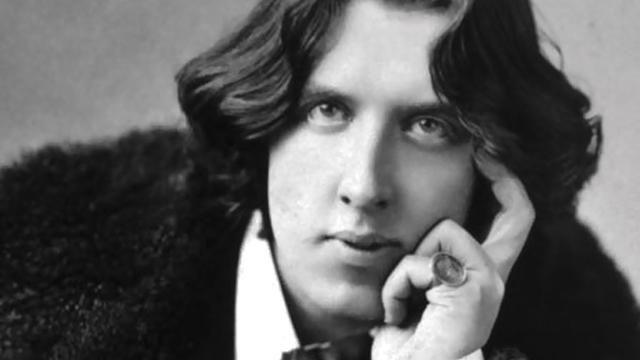
You know that I can't pass up the opportunity to comment on a story about video games featuring a huge picture of Oscar Wilde, right?

"Congratulations! You have destroyed the vile Red Falcon and saved the universe!"
Obviously, "The game author is dead" is just a headline designed to make people angry, since that's sort of what Kill Screen does...but...IT FUCKING WORKED BECAUSE NOW I'M ANGRY.

I spent a good chunk of my dissertation chapter on Minecraft describing how gameworlds are co-constructed between the player and the developer, so obviously my opinion runs a bit counter to this piece...but, specifically, I have a problem with the conflation of video games as an expressive medium with older media (in this case, literature) that's implied here.

Now, I've spent an ungodly amount of time in English departments in the last decade and nearly-a-half, so I'm pretty familiar with the turn in literary criticism from the author-as-text-and-meaning-maker to the author-as-text-maker/audience-as-meaning-maker. To me, they're both true to an extent: an author creates something with a certain intent (why the hell would you write an entire book otherwise?) which the audience interprets any number of ways, projecting themselves and their experiences onto the text and maybe coming close to understanding the author's original intent, and maybe not.
"I'm pretty sure it's about, like, construction workers, and, like...uhngugnkgalsgdlsa"
Ultimately, it doesn't really matter how close you get to the creator's interpretation (though it might matter how close you get to your professor's interpretation, depending on how vindictive he/she is): they create a static work, put it out into the cultural stream (that sounds gross) and then you consume it (okay, that sounds grosser). The relationship is pretty one-way.

With games, though, things are a bit different. The creators (coders, developers, whatever you want to call them...the people who make the game) only do part of the work of creating the gameworld (I won't say "story" here because that would then open a different and much larger can of worms). There's a very fundamental difference between literature and games, which is that in the course of playing the game, you help create it. Sure, if not a single person reads a book when it is released (like my dissertation, for example), it doesn't perhaps reach its fullest potential as an expressive work, but it still fundamentally exists. Gameworlds really only, truly exist when there is someone moving through them (via an avatar or what-have-you), and, like some extra-dorky version of Heisenberg's Uncertainty Principle, once you've begun observing the gameworld, your input becomes a part of its output.

Thought it might sound like I'm arguing that games are even less dependent on the author than literature here, the reality is that the creation of a gameworld is necessarily symbiotic (player + "author"). The only situation in which the game author can be dead is the hypothetical one in which we make our own game and play it ourselves and never let anyone else play it, and even that is still a sort of "player + author" situation.

Sure, arguing that the game author is dead is nice and provocative, but it's fundamentally impossible. The book author's intent might not matter once you start reading and latch on to your own particular interpretation. However, the game author creates the very system of rules from within which you form your opinion of his/her work, and thus seems, to me, to be pretty indispensible to the process of interpretation.


Dec 13, 2012

Some Statements Related To Video Gaming That I Take Issue With, Part One

The ol' rage-o-meter just spiked, thanks to this video, or, more appropriately, the text that accompanies it. Apparently, RPG elements improve every game, and now the new Tomb Raider has them!

Why does this enrage me, you ask? Well, because I'm a middle class white American male! I've got to have something to get angry about! And today, "RPG elements" are that thing.

First of all, what the fuck are "RPG elements"? I've played a lot of RPGs in my time, and boy do they have a lot of elements, both collectively and individually. Said elements do in fact seem to be making their way into every single game on earth lately, and I'm not entirely sure that it's reasonable to say that they improve every single one of those games.

Short version: there's a reason that the RPG is a genre. Now, I'm all for genre cross-pollination (in games and also in books, music, movies, whatever), but I sincerely question the validity of needing to inseminate every other game genre with RPGs' fundamental DNA, which includes (often, though not always) leveling, classes, statistical categories, and other often number-based complexities (the things that I assume the IGN author means by "RPG elements").

Long version: Games are systems. They are also worlds. The system (the code) builds the world, and dictates how the player can and cannot interact with it. We're at a wonderful stage of genre cross-pollination right now with regard to games, but it seems like so often the result of the cross-pollination is simply to throw more systems at the player, under the assumption that if you gives him/her enough things to do, they'll walk away feeling like they got their money's worth. And to a degree, I think this works. Learning to master systems, overcoming obstacles, and then learning to turn the rules of the game to our advantage is inherently satisfying, whether we're talking about football or World of Goo.
Button hook on 3?
However, just tossing more systems into the mix willy-nilly makes it difficult to maintain any sense of a coherent world. So yeah, when I play a game like the new Tomb Raider (which I obviously haven't played, but I have played a lot of similar adventure/FPS-type games with RPG elements grafted on to them), there is always some satisfaction in unlocking a new skill by accruing enough skill points, or XP, or whatever it's called in any given game. It's nice to feel like I earned that particular skill and that once I've earned enough points, I have a chance to choose how to spend those points in a way that will suit my play style. So it's accomplishment first, followed by the opportunity to personalize a character in a superficial way (which, for some reason, often gets conflated with "role playing"). The question I have in this situation is "Who buys Tomb Raider to role-play?" We don't. We buy Tomb Raider because Lara Croft is badass and we want to control her and use her powers of awesome to kick all the ass on earth. So while it's a momentary reward of sorts to unlock a new skill for Lara as a result of your awesomeness at ass-kicking, it feels strange to me in the larger context of the game. Why do I need to have a Lara who is a survivalist or a Lara who has better eyesight? Why can't I just have an awesome superhero with all kinds of neat powers and not feel like I need to play through the game 18 times in order to get to do all the cool things in it? Because RPG elements, that's why.

Maybe the best way to explain what the face-fuck I'm talking about is to talk about Deus Ex. Deus Ex is, nominally at least, an FPS with RPG elements. And yet, your manipulation of the game's skill system has dramatic consequences "on the ground," so to speak. If you create yourself to be a master hacker, you can hack your way through shit, but if things go south, you're not going to power your way out of trouble with your rocket launcher, because chances are your character's too weak to even lift and fire the damn thing. Deus Ex makes sure its RPG-style skill system makes sense in the larger context of the world and the way that the player survives and succeeds with in: the system has weight. In many RPG-inflected games since, that hasn't been the case. It's like the industry saw that a few games like Deus Ex successfully put fried onions in a burrito, and so now everything's got to have fried onions in it, even the goddamn carrot cake.
Do you really want to hurt me? Do you really want to make me cry?
Sure, in a lot of these games (and I'm sorry for not providing an example right now, my brain is literally seeping out of someone else's eye sockets), you can customize things like Accuracy, Weapon Specialization and such fancy things, but all your choices really mean is that the game is slightly harder if you choose to create an physically weak, eagle-eyed sniper and then plow through while bludgeoning everything with a war hammer. Beyond that, there aren't any real consequences, because (presumably) developers want the player to eventually be able to work their way through the game however they want, so that they keep coming back happy.

Contrast this with, say, Baldur's Gate 2 (since that's what I'm playing now). If you create a Dwarf fighter who specializes in crossbows and axes, just try fighting a high-level enemy with a bow or a knife and see how far you get. At some point, your choices catch up to you, and within the game world, to succeed, you need to play as the character you've chosen to be. Those character-defining decisions carry weight. That's RPG elements for you.

Slapping a bunch of cool "bonus" skills together into a skill tree and requiring the player to kill a thousand bad guys to unlock them all has nothing to do with role-playing, and honestly I have a really hard time understanding how they "improve" anything. Sure, it gives you more stuff to do, but since when has gaming been about giving the player more things to do, just for the sake of doing them?